March 14, 2026
Why Are B2B Brands Moving From Traditional Keyword Campaigns To Google’s Performance Max
Share:



If you’ve been running B2B campaigns in Google Ads for a while, you’ve likely noticed the old keyword-focused approach becoming less effective. Exact match keywords aren’t as precise as they once were, cost-per-click for high-value terms keeps rising, and keyword reports don’t always show what’s actually driving qualified leads.
This reflects a broader shift in how Google wants campaigns to run. The platform is moving toward AI-driven systems that focus on outcomes such as leads and conversions rather than individual keywords.
Performance Max is a key example. It uses machine learning to find potential buyers across multiple Google channels and optimise campaigns around conversion goals.
For B2B advertisers, where buyers research across many touchpoints before contacting sales, this approach can help reach the right people earlier and improve campaign efficiency.
In this post, you’ll learn why more B2B brands are shifting from traditional keyword campaigns to Performance Max.
Key Takeaways
- Traditional keyword campaigns are losing effectiveness: exact match is less precise, costs are rising, and search mainly captures late-stage intent.
- Google Performance Max uses AI to optimise campaigns for conversions across multiple channels, not just keywords.
- PMax now provides channel performance reporting, asset-level insights, and full search term data.
- Negative keywords and expanded search themes help reduce wasted spend on irrelevant clicks.
- Smart bidding can prioritise high-value or new customers, improving ROI beyond simple form-fill conversions.
- Demographic and device targeting reach decision-makers instead of casual browsers.
- PMax covers the full buyer journey across Search, YouTube, Display, Gmail, and more.
Why traditional keyword campaigns are losing effectiveness
1. Exact match keywords no longer guarantee precision
Exact match keywords have been giving advertisers strong control. If you targeted “cloud data warehouse platform,” your ad mostly showed when someone searched that exact phrase.
Today, Google focuses more on search intent than exact wording. The same keyword might trigger searches like “enterprise data storage solutions” or “analytics tools for large companies.” Some of these searches are relevant, but others are not.
This can get expensive. Your ad might attract clicks from students researching tools or startups looking for free options. When B2B clicks can cost $60 to $120, even a few irrelevant clicks can waste a lot of budget.
2. Rising Cost Per Click (CPC) puts pressure on B2B budgets
B2B keywords have always been expensive because each customer can be highly valuable, but costs have risen even further in recent years.
Key factors driving higher CPCs include:
- More advertisers are competing in the same auctions
- Multiple campaigns within an account are competing against each other
- Limited control over negative keywords, which lets irrelevant traffic through
For example, if a click costs $100 and your landing page converts at 2.5%, acquiring a single lead costs about $4,000–$4,500. If 20% of those leads turn into sales and the average contract is $50,000, the cost to acquire a customer reaches roughly $22,500.
3. Search campaigns only capture the final stage of the B2B buyer journey
Keyword campaigns only show ads when someone searches. But most B2B buying decisions start long before that.
Many buyers complete 57% to 70% of their research before contacting a vendor. By the time someone searches for “cloud migration services,” they may already have a shortlist. During the process, they read articles, watch videos, attend webinars, and see content on platforms like LinkedIn.
Search ads usually appear at the end of that journey. They often get credit for the final click, even though the relationship with the buyer developed over months through other channels. This can lead teams to focus too much on search and ignore earlier marketing that actually shapes the decision.
Why B2B businesses are turning to Google Performance Max in 2026
1. Gain full visibility across all marketing channels
You can now see exactly which channels are spending your budget and which ones are driving conversions.
When Performance Max first launched, one of the biggest complaints was the lack of transparency. You could run a campaign and see conversions, but you had little insight into where those conversions were coming from. Was the performance driven by Search, YouTube, or Display? The data simply wasn’t clear.
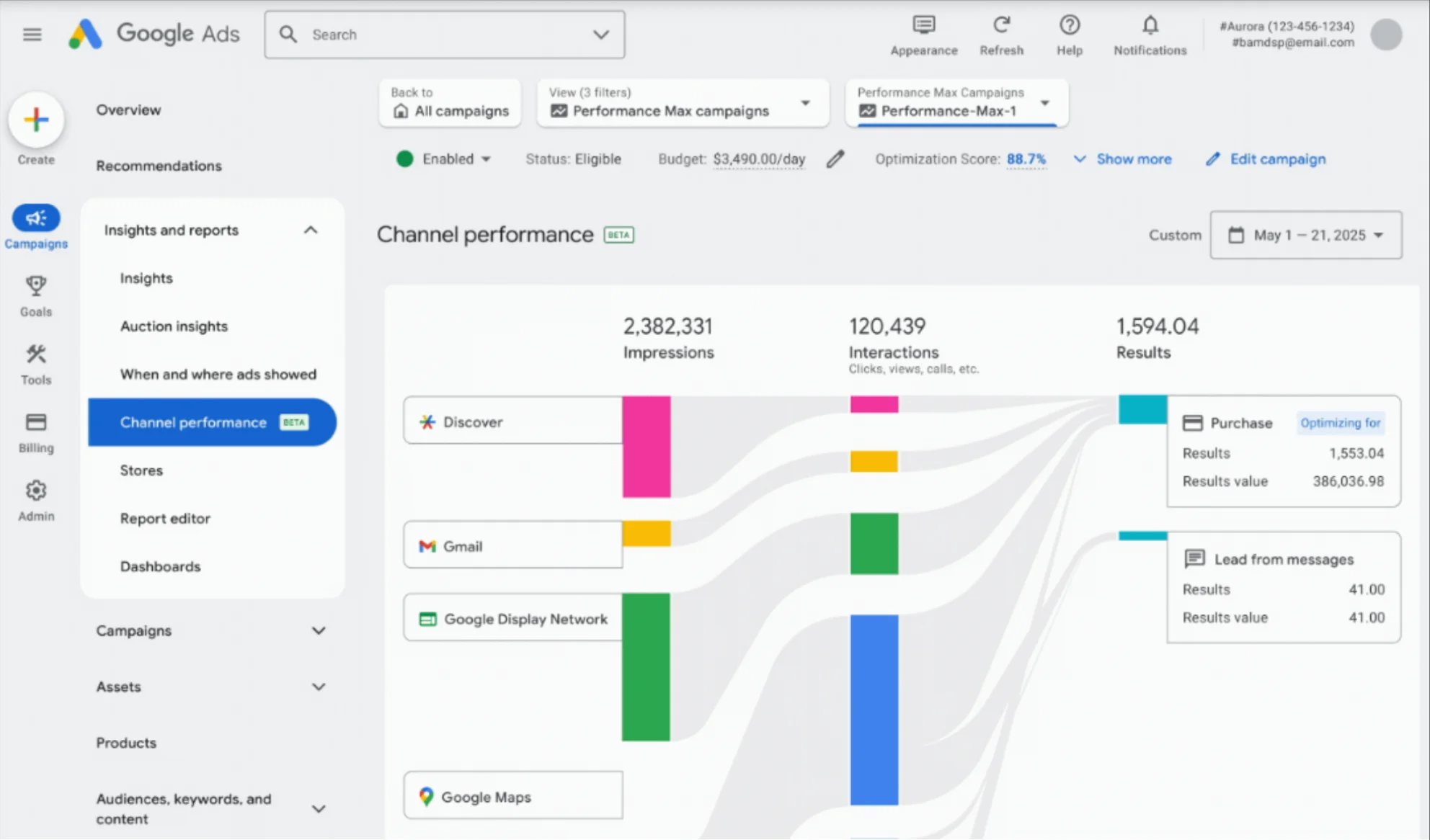
For B2B marketers who need to report performance and control cost per lead, that lack of visibility was a serious problem.
Google has since introduced a channel performance report that breaks down results across Search, YouTube, Display, Gmail, Discover, and Maps. This allows you to see exactly where your ads are running and how each channel contributes to your conversion goals.
Asset reporting has improved as well. Instead of only showing conversions, you can now see impressions, clicks, and cost for each asset, including headlines, descriptions, and images. You can also segment the data by device, network, and time.
Performance Max is no longer a complete black box. You now have enough visibility to understand what is working and make adjustments.
2. Reduce wasted spend with negative keywords and expanded search themes
You can now add negative keywords directly in Performance Max to prevent your ads from showing for the wrong searches.
This has been a major limitation since the campaign type launched. Without campaign-level negative keywords, advertisers had little control over irrelevant traffic.
For example, if you sell enterprise HR software, you might see your ads triggered by searches like “free HR templates”, “how to run payroll yourself”, or “HR advice for small businesses”. These searches may generate clicks, but they rarely generate qualified leads.
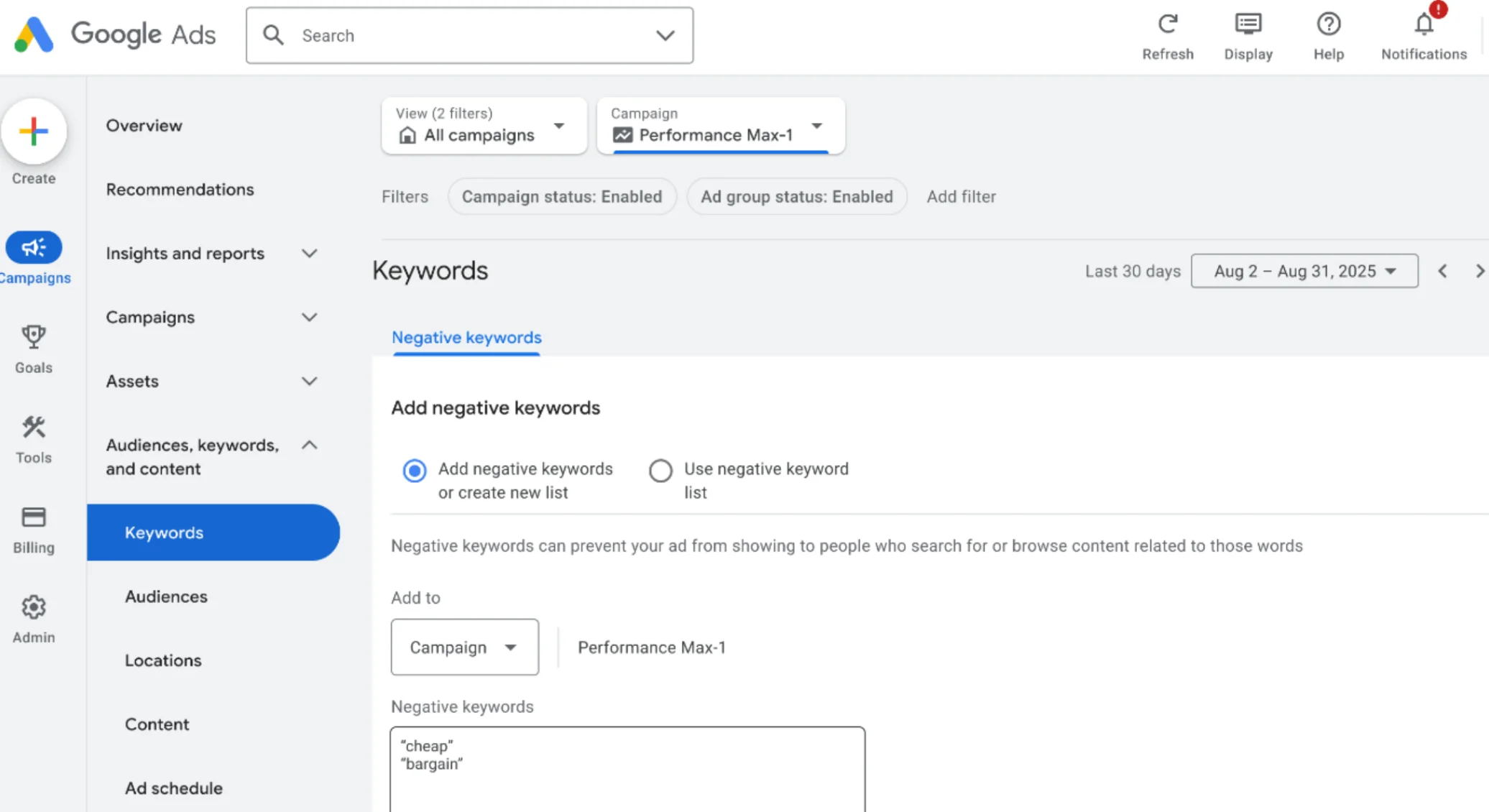
In the past, there was little you could do to prevent this. As of 2025, Google allows advertisers to add up to 10,000 campaign-level negative keywords directly within Performance Max. You can also apply negative keyword lists to filter out irrelevant queries across Search and Shopping inventory.
Google has also expanded search themes from 25 to 50 per asset group. Search themes guide the system toward relevant searches rather than matching exact keywords. With more themes available, you can signal a wider range of relevant queries to the algorithm.
This added control helps reduce wasted spend and improves lead quality.
3. Optimise for customer value, not just form fills
Performance Max now lets you prioritise higher-value customers, rather than treating every conversion the same.
In B2B marketing, not every lead has the same potential value. A small customer signing a short contract is very different from a large enterprise client committing to a multi-year deal.
Traditional automated bidding often treats every conversion equally. A form submission counts the same regardless of who submitted it.
Performance Max now offers tools that help address this problem. New customer acquisition goals allow you to tell Google to prioritise first-time buyers. You can choose to bid higher for new customers while still converting existing ones, or focus entirely on acquiring new accounts.
Retention goals also allow you to identify lapsed customers and increase bids to win them back. When combined with Customer Match data, you can identify the segments with the highest lifetime value for your business.
Google has also improved reporting accuracy. Previously, many conversions were labelled as “Unknown,” which made it difficult to determine whether they came from new or returning customers. That reporting gap has been significantly reduced.
For B2B companies where long-term relationships drive revenue, this shift toward lifetime value is a meaningful improvement.
4. Reach real decision-makers with demographic and device targeting
Performance Max now includes demographic and device signals that help you guide campaigns toward more relevant audiences.
You need to reach people who can actually evaluate vendors and influence purchase decisions. This is the same idea behind account-based marketing: focus on decision-makers instead of casting a wide net.
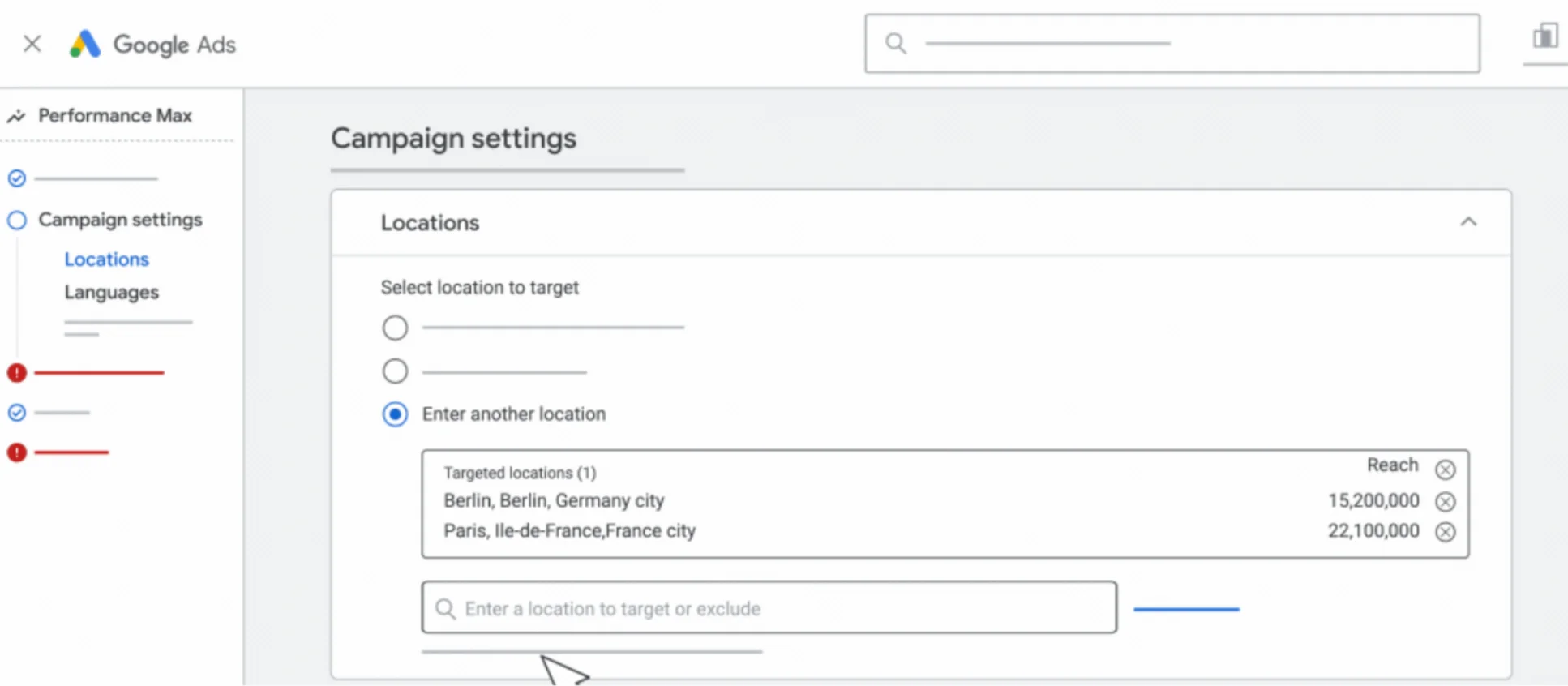
Performance Max uses demographic signals such as age and household income to steer campaigns toward users who are more likely to match your typical buyer profile. These signals don’t act as strict targeting filters, but they help the system prioritise the audiences most likely to convert.
Google has also introduced device targeting, allowing you to prioritise desktop, mobile, or tablet traffic. Many B2B buyers do serious research on desktop devices during work hours, comparing vendors, reviewing case studies, and evaluating pricing.
Mobile traffic, especially outside work hours, often signals lighter browsing rather than active purchase research.
5. Google Performance Max: cover the entire B2B buyer journey with one campaign
Performance Max lets you reach buyers across multiple channels without managing separate campaigns.
B2B buyers rarely make decisions quickly. A typical journey might start with a Google search, followed by watching a product demo on YouTube. Later, the same prospect might see a remarketing ad on Display or Gmail before eventually returning to request a demo.
Managing separate campaigns for every stage of that journey can be complex. Performance Max simplifies this by running ads across Search, YouTube, Display, Gmail, Discover, and other placements from a single campaign. Google’s AI automatically distributes budget across channels based on where conversions are most likely to happen.
Recent updates have also improved visibility into search behaviour. You can now have full search terms reporting within Performance Max. This allows you to see the exact queries that triggered your ads.
For smaller B2B marketing teams, this consolidation can make campaign management much more efficient.
Is Performance Max right for your B2B business?
Performance Max has become more effective for B2B advertisers. It offers better reporting, smarter bidding and stronger audience controls, but it still relies on strong inputs such as accurate conversion tracking, clear negative keywords and high-quality creative assets.
A practical way to approach it is to run Performance Max alongside your existing Search campaigns. Monitor results closely, refine audience signals and themes and expand negative keywords as data builds. It isn’t a set-and-forget tool but when structured properly, it can help you reach buyers across the full decision process while simplifying campaign management.
At KLIQ, we help B2B organisations interpret these signals through KLIQmetrics™, our marketing analytics dashboard that brings greater clarity to campaign performance and ongoing optimisation.
If your Performance Max campaigns aren’t delivering the leads you expected, it may simply be time to review your ads strategy behind them. Contact the team at KLIQ if you would like an expert perspective on your B2B paid advertising campaigns. We are always happy to share practical advice and help you understand what could improve the performance of your Google Ads and Performance Max campaigns.
FAQs
Google Performance Max is a goal based campaign type that uses automation and machine learning to serve ads across Search, Display, YouTube, Gmail and Discover. For B2B brands, it enables full funnel coverage by using audience signals, first party data and conversion tracking to drive high quality leads rather than just traffic.
Yes, Performance Max can be highly effective for B2B lead generation when structured correctly. Success depends on feeding the algorithm strong conversion data, aligning campaigns to high intent audiences and using CRM integrations to optimise for qualified leads, not just form fills.
B2B brands are moving to Performance Max to consolidate campaign management, improve cross channel reach and leverage automation for better efficiency. It also allows marketers to tap into intent signals across Google’s ecosystem, which is critical for longer and more complex B2B buying journeys.
Unlike traditional Search or Display campaigns, Performance Max uses a single campaign to access all Google channels. While this reduces manual control, it increases scale and efficiency. For B2B advertisers, the key is balancing automation with strategic inputs such as audience signals, creative assets and conversion tracking.
Best practices include using high quality first party data, setting up offline conversion tracking, aligning campaigns to clear business objectives and structuring asset groups around specific audience segments. B2B brands should also prioritise lead quality metrics over volume to drive real pipeline impact.
To improve lead quality, B2B marketers should integrate CRM data, use value based bidding and define conversion actions that reflect qualified opportunities. This ensures Google optimises towards leads that are more likely to convert into revenue, not just initial enquiries.
Performance Max offers less visibility and control compared to traditional campaigns, particularly around keyword level data and placements. For B2B brands, this can make optimisation more challenging unless supported by strong data inputs, clear audience signals and a well defined measurement framework.
Performance Max campaigns typically require a learning period of two to four weeks. For B2B campaigns with longer sales cycles, it may take longer to see meaningful results as the algorithm needs time to gather sufficient conversion data and optimise towards high value leads.
Successful campaigns rely on accurate conversion tracking, audience signals, customer match lists and CRM integrations. The more high quality data you provide, the better the algorithm can identify and target high intent B2B prospects across Google’s network.
Performance Max can support ABM by targeting known accounts using first party data and expanding reach through similar audiences. When combined with channels like LinkedIn and SEO, it helps reinforce messaging across multiple touchpoints and accelerate engagement with high value accounts.
Not entirely. Performance Max works best as a complement to Search campaigns, not a replacement. B2B brands should retain high intent keyword targeting through Search while using Performance Max to scale reach, capture incremental demand and support upper funnel activity.
KLIQ helps B2B brands maximise Performance Max by aligning campaign strategy with revenue goals, implementing advanced tracking and integrating first party data. This ensures campaigns are optimised for pipeline growth, not just clicks or impressions. Learn more about our paid media and ABM services at https://kliqinteractive.com/.