March 7, 2026
What Google Ads Updates from 2025 Mean for B2B Brands in 2026
Share:



Google Ads changed in 2025, and B2B companies are feeling the impact. The biggest shift is toward AI and automation.
They launched AI Max for Search to automatically find and target the right audience, while Performance Max now gives advertisers more visibility into budget allocation. Brands can also appear in Google’s AI Overviews and AI Mode.
For B2B marketers, this matters because buyers do over 61% of research before contacting a vendor. In fact, in 95% of deals, the winner was already on their shortlist. If you miss this research phase, you may miss customers.
Adopting these AI tools can help you focus on high-quality leads rather than waste budget on irrelevant traffic.
This article explores what the 2025 Google Ads updates mean for B2B businesses and how to make them work for you.
Key takeaways
- Ads now appear inside AI Overviews, reaching buyers early when forming decisions
- AI Max adapts messaging for different personas without managing separate campaigns
- Smart Bidding Exploration targets problem-aware buyers before they search for your product
- Target CPC bidding suits B2B's long sales cycles and multi-vertical strategies
- Demand Gen now covers the full Google Display Network for broader reach
- Auto-generated video ads give budget-limited teams production capability
- Performance Max now offers channel-level and search term reporting — no more guesswork
- Ads Advisor delivers account-specific guidance without needing a dedicated specialist
What the Google Ads update means for B2B business
Here's what changed and what it actually means for your business.
1. Ads can now appear inside AI overviews
If you've used Google recently, you've seen the AI-generated summaries that appear at the top of search results, the ones that answer the question right there on the page. Google now places ads inside those summaries.
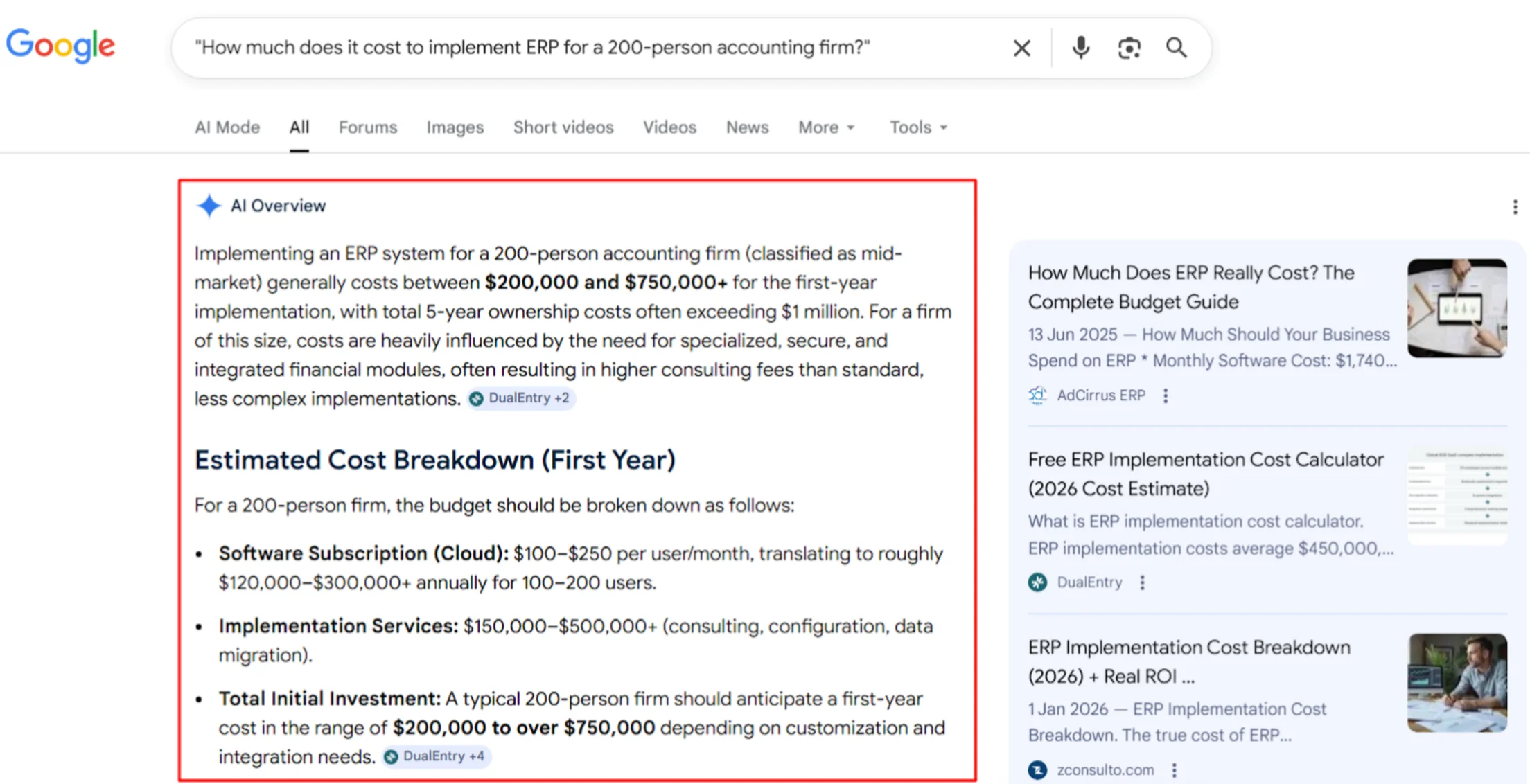
Your buyers aren’t searching like they used to. For instance, a CFO is unlikely to type “ERP software” into Google; they ask, “How much does it cost to implement ERP for a 200-person accounting firm?” These early-stage questions happen before buyers have a shortlist or know exactly what they need.
Since mid-2024, organic clicks on searches with Google’s AI Overviews have dropped 61%, and paid clicks have dropped 68%. Where your ad appears now matters more than ever. Ads that appear within the AI Overview tend to attract far more attention and engagement than those that appear outside it. Being in the AI answer makes your brand part of the solution people read.
2. AI Max for Search handles messaging that used to need multiple campaigns
If you sell the same product to different types of buyers, you already know the challenge. The message that works for one persona often doesn’t work for another. Traditionally, the only way to handle this was to create separate campaigns for each audience, each with its own ad groups and messaging.
AI Max for Search changes how this works. Instead of forcing you to build multiple campaigns, AI Max uses Google’s AI to adapt your ads to each search in real time. It analyzes signals such as search intent, keywords, landing page content, and user behavior to generate and optimize headlines and descriptions that better match the buyer's search intent.
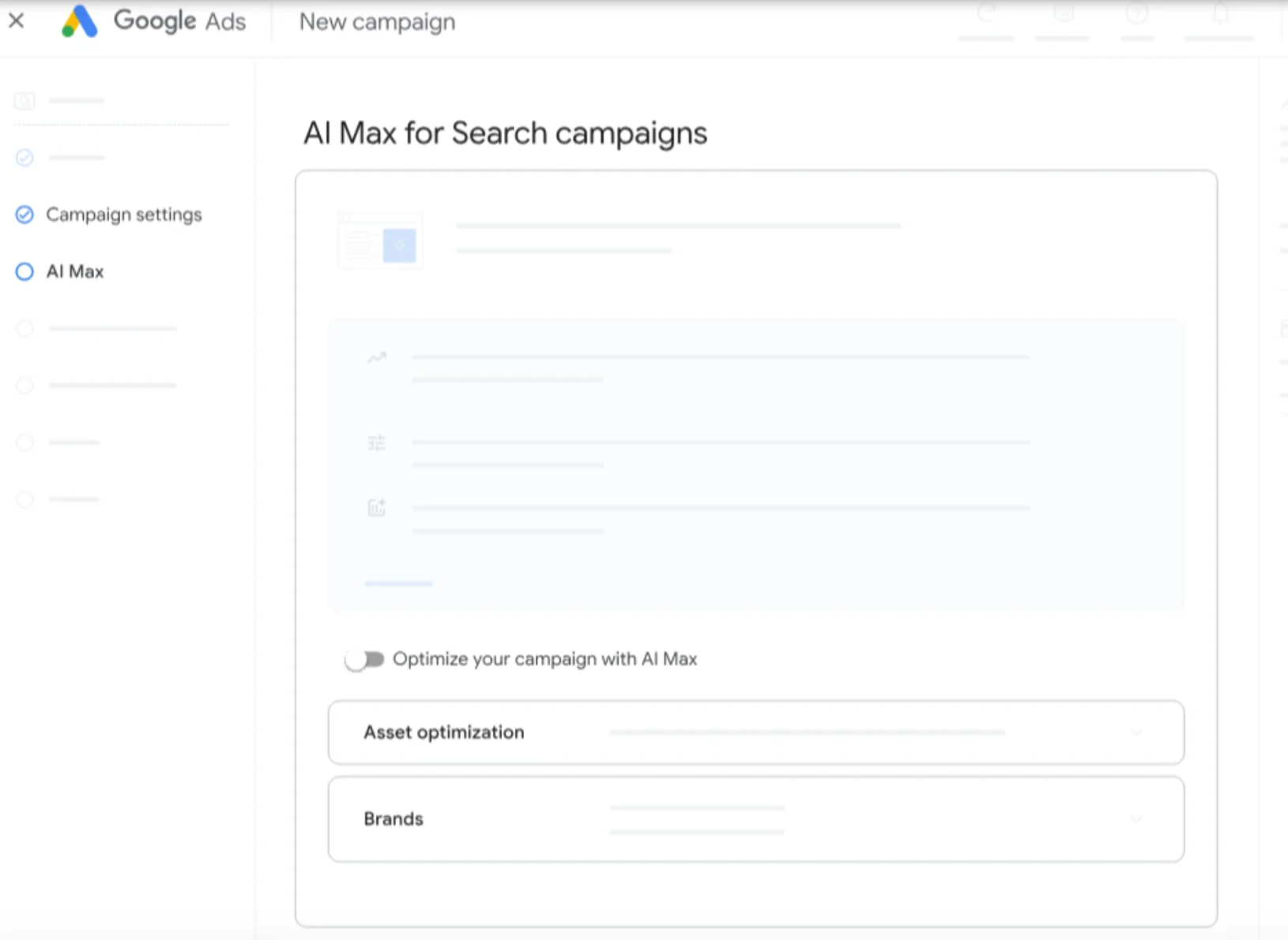
For example, imagine you sell workforce management software. A hospital operations director might search for solutions related to compliance, staffing coverage, or patient safety. A retail chain manager might search for ways to reduce overtime or fix scheduling inefficiencies. The product is the same, but the messaging needs to highlight a different value.
With AI Max enabled, Google can automatically tailor the ad copy to match that intent. It can also route users to the most relevant landing page using URL expansion, rather than always sending every click to the same page. This approach helps campaigns capture more relevant searches and improve performance.
3. Smart Bidding Exploration reaches buyers earlier in the journey
Most of you stick to a small set of product keywords because budgets are tight. But most buyers don’t start by searching for your product; they search for their problem. If you only appear at the product-search stage, you’ve already missed part of the decision window.
For example, a plant manager who wants to buy an industrial automation system is more likely to search “why is our production line running slow” or “how to reduce packaging downtime” than “conveyor belt systems.” Competitors who appear for these early searches earn attention and credibility long before formal vendor evaluations begin.
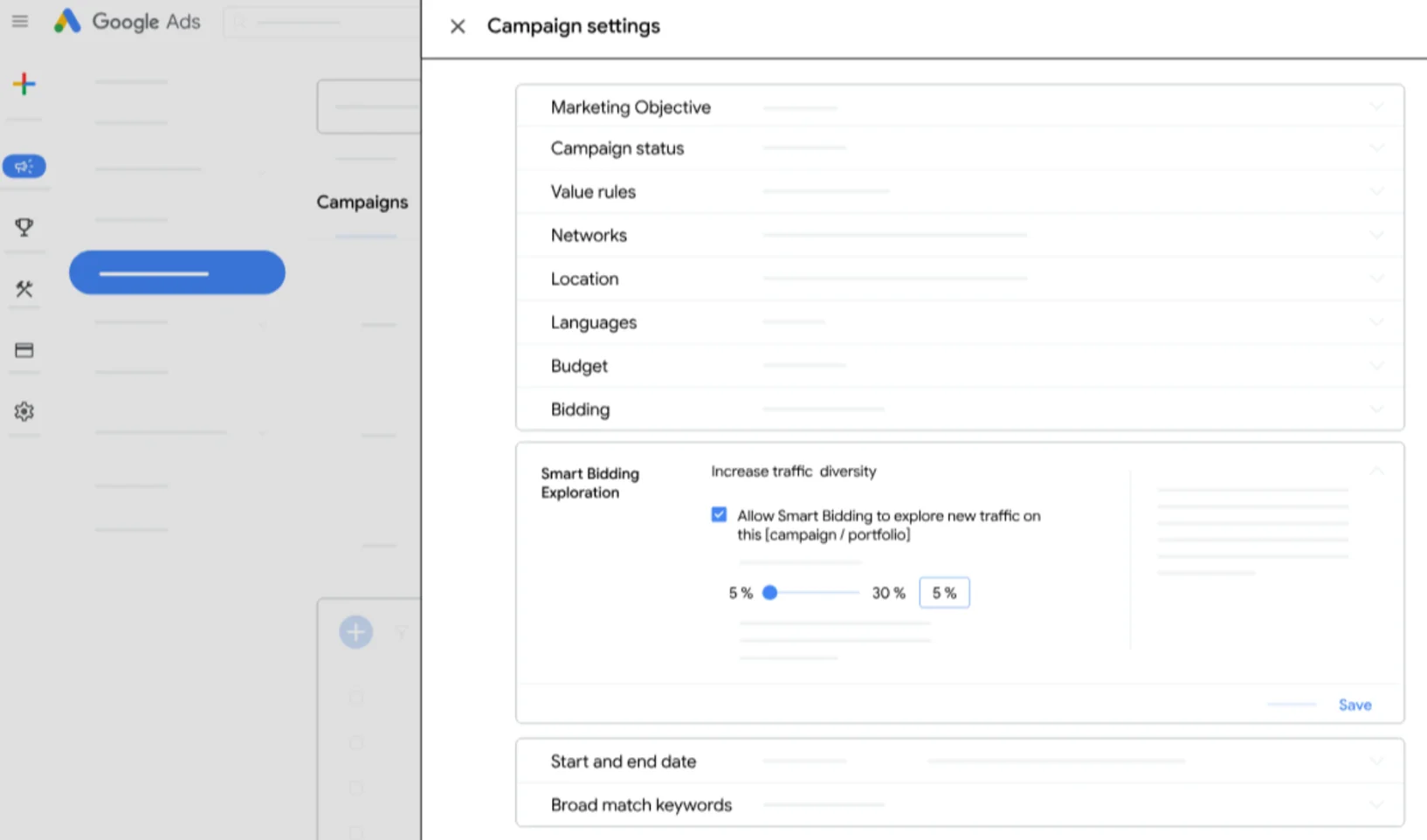
Smart Bidding Exploration lets you safely test these problem-focused searches. It only expands into new queries when performance is expected to match your existing keywords, and it explores carefully rather than randomly.
Campaigns using this feature have seen an 18% increase in new converting search query categories and a 19% increase in total conversions. Early searches also tend to have lower competition and lower cost-per-click than direct product terms.
By thinking beyond last-click conversions, you reach buyers earlier and build demand before competitors even know the opportunity exists.
4. Google introduced CPC bidding options that work for B2B's long sales cycles
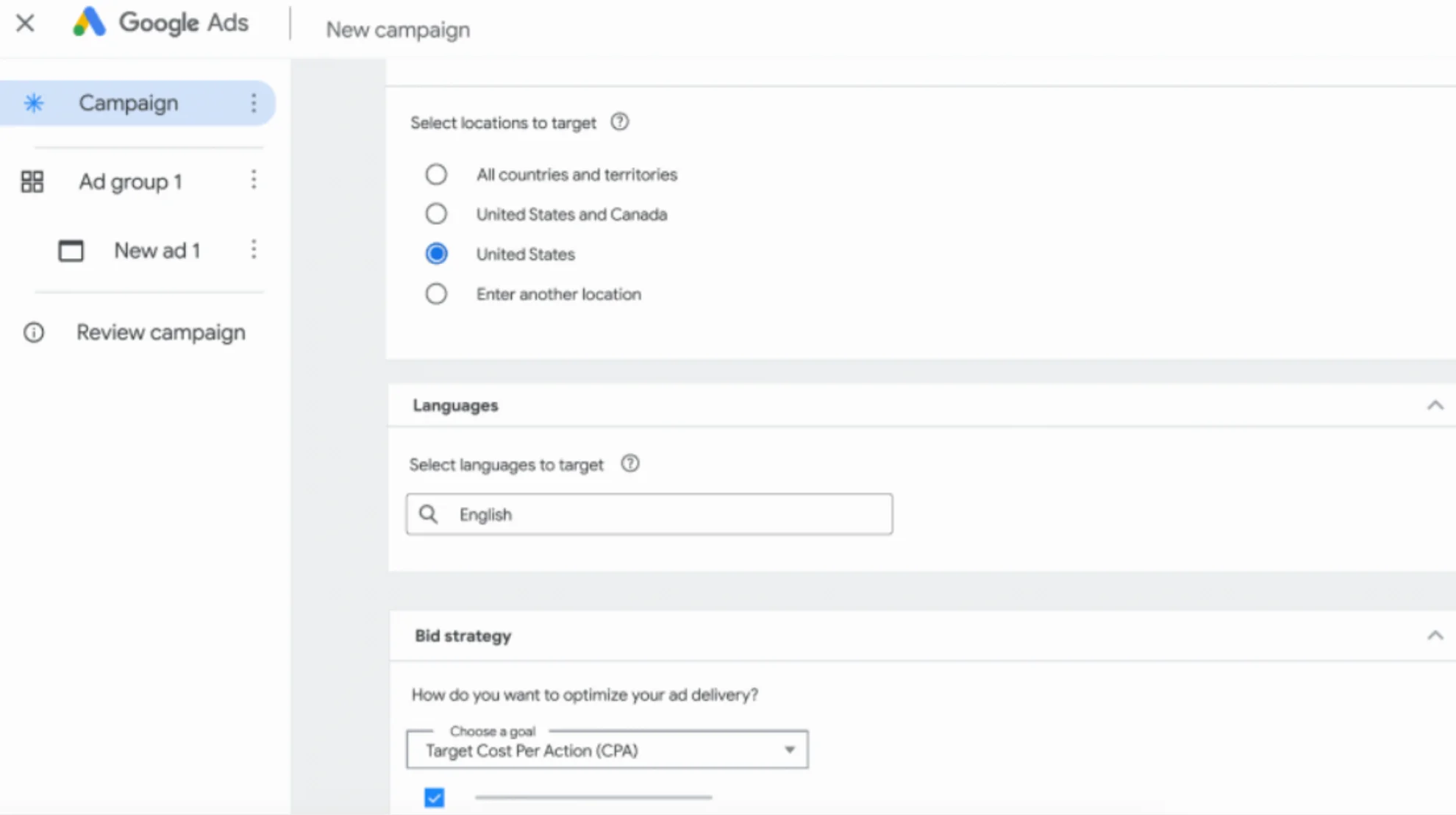
Google offers target Cost Per Click (CPC) bidding for Demand Gen campaigns, letting you experiment with any bidding strategy. B2B buying cycles are long, and not every campaign is about immediate conversions.
For example, a facilities manager considering a commercial solar energy system won’t sign a contract the same week they click an ad. They’ll need internal approval, proposals from multiple vendors, and time to review audits.
Your goal early on isn’t a signed deal; it’s getting the right person to visit your site, download a case study, and remember your brand when the formal process begins.
Target CPC bidding helps by driving clicks from audiences that match your past buyers, even when there isn’t enough conversion data yet to optimize for a specific action.
The experiments feature lets you test strategies, like maximizing conversions versus target Cost Per Acquisition, to see what actually works in your market. This is especially useful if you serve multiple industries, where what converts in one vertical might underperform in another.
5. Ads can reach buyers across the entire Google Display Network
Demand Gen campaigns used to be limited to YouTube, Discover, and Gmail. Now your ads can appear across the entire Google Display Network, millions of websites where your buyers are already spending time. Think industry blogs, trade publications, research portals, and news sites.
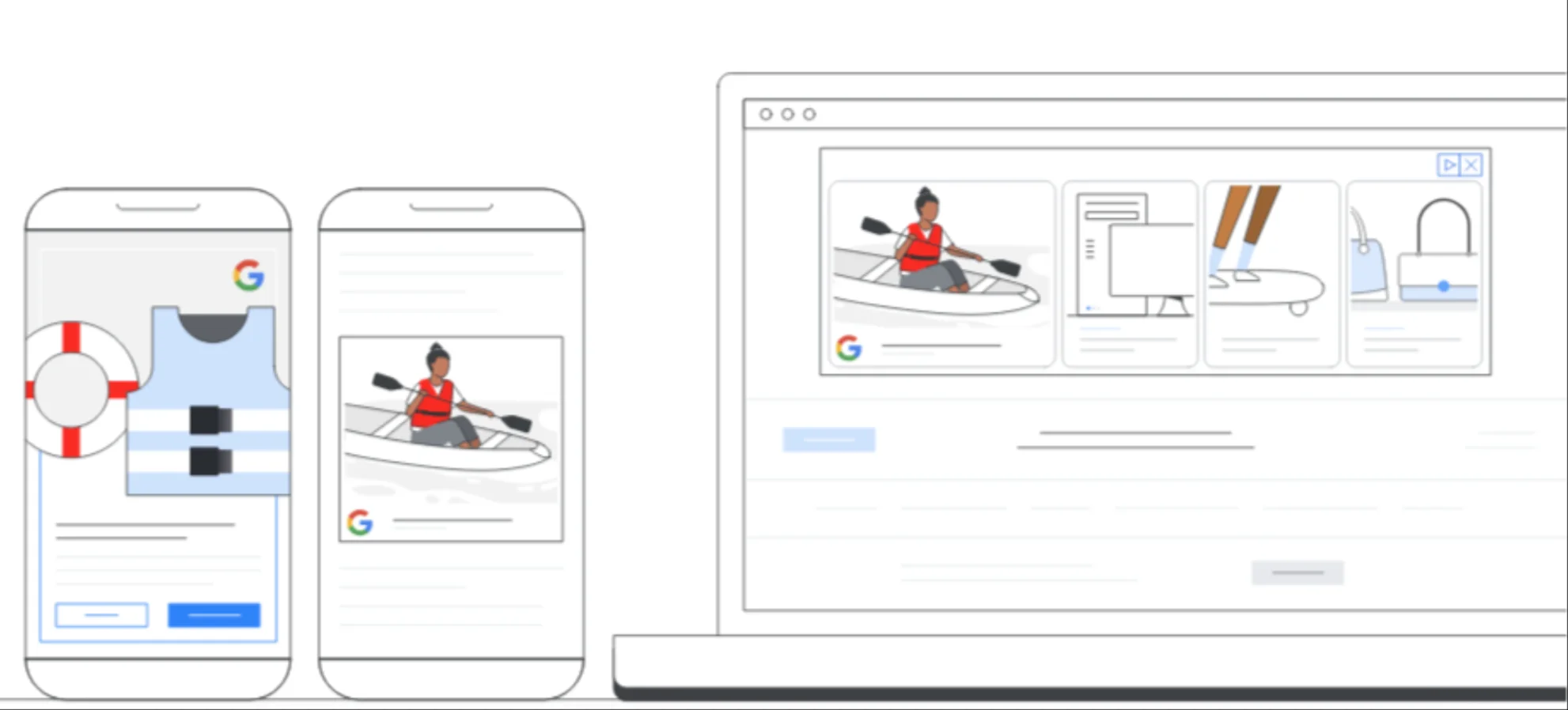
This is important because buyers don’t spend all their time watching videos or scrolling feeds. They often research topics in depth.
For example, a hospital procurement officer might spend time reading a healthcare administration journal online. A CTO at a fintech startup might be reading a detailed blog post about API security. A logistics director might check supply chain news during their morning commute.
These moments matter because that’s when buyers are actively learning and thinking about solutions.
Also, you must know that more than 70% of B2B buyers avoid suppliers who send irrelevant outreach. That means interrupting people with random ads is less effective than appearing in places that match what they’re already reading or researching.
With the expanded reach of the Display Network, Google’s AI can identify people who are showing buying signals across these sites and place your ads in relevant contexts. Instead of interrupting buyers, your brand shows up while they’re already engaged with the topic.
Also, learn why Meta Ads are essential to a complete B2B strategy alongside Google Ads.
6. A Google Ads specialist, without the salary
Ads Advisor is built into Google Ads and works like having a specialist who actually knows your account. It learns your history, your landing pages, how your conversions behave, and who your audience is, then uses all of that to give you relevant, specific guidance instead of generic tips.
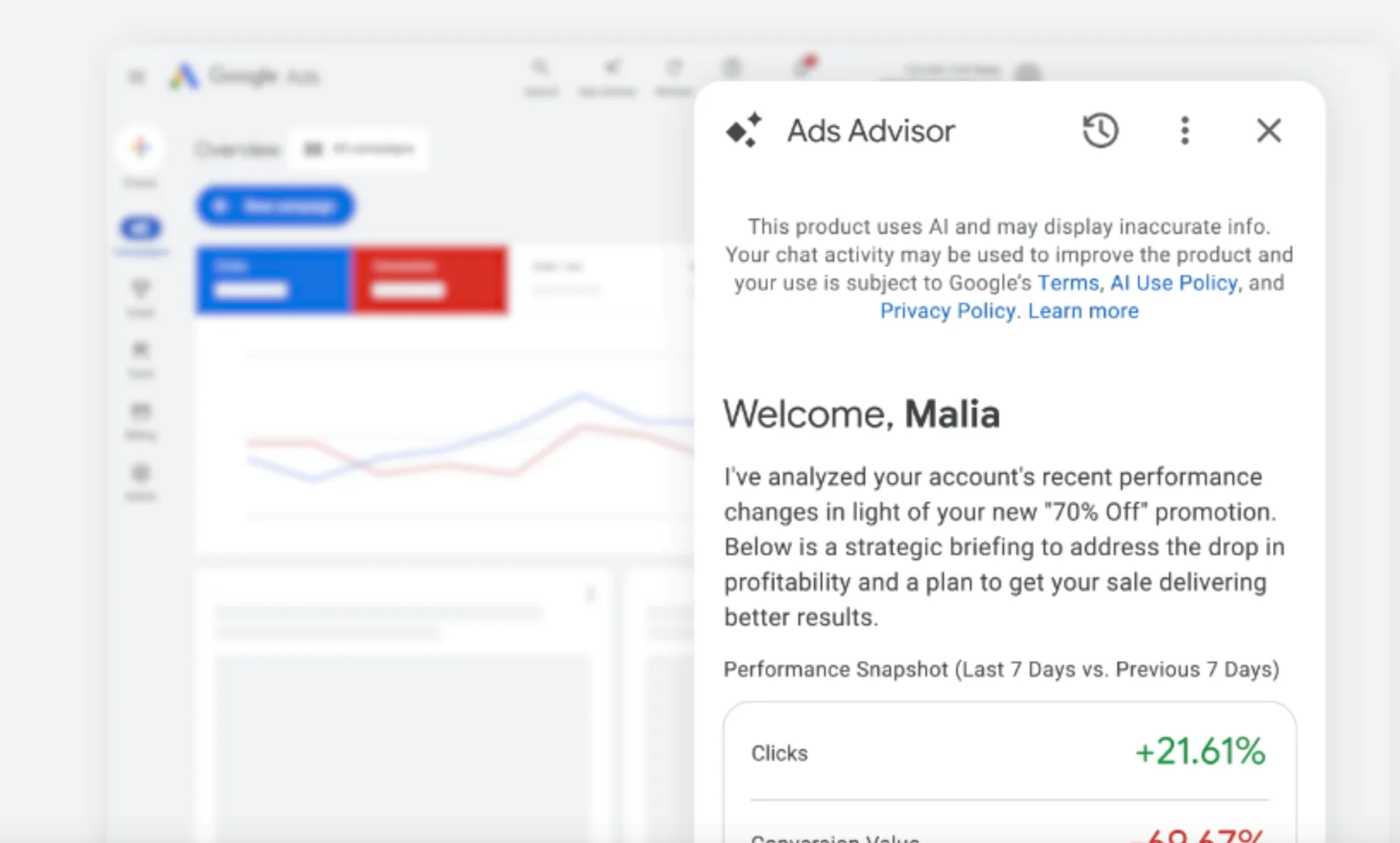
For instance, if your cost-per-lead suddenly jumps, Ads Advisor can tell you whether it's because competitors are bidding more aggressively, your landing page has an issue, or search behaviour has shifted, and what to do about it.
If you launch a new product or feature, it can suggest new ad groups, bidding changes, and audience tweaks based on what's already worked for you. Pairing this with a clear view of your B2B marketing metrics ensures you're acting on the right signals.
7. Google can auto-generate video ads for your campaigns
Video ads tend to perform well, but producing them is expensive, slow, and for many B2B brands, simply not possible with the budget available. That changes with Demand Gen's auto-generated video feature, which uses Google AI to turn your existing assets into ready-to-run video ads.

If you have product screenshots, project photos, a logo, and a few lines of messaging, that's enough. You upload what you have, and Google builds an optimised video ad without you needing a production team or an agency.
You also retain control over where and how your ads appear. You can choose between YouTube, Discover, the Display Network, and Gmail. Also, select the format that fits your goal, whether that's building brand awareness with new audiences or generating inbound leads from buyers already researching your category.
For B2B brands with limited marketing resources, this effectively gives you a video production capability you didn't have before, without the cost that usually comes with it.
8. Track your Ad spend with Performance Max channel reporting
Google now gives you detailed channel-level reporting for Performance Max campaigns. You can see how your budget is performing across Search, Display, YouTube, Discover, Gmail, and Shopping, broken down by format, metrics, and diagnostics.
Before this update, Performance Max was essentially a black box. If you were spending $15,000 a month, you had no way of knowing whether your leads were coming from YouTube pre-roll ads, Gmail promotions, or Search. You couldn't tell which channel was worth scaling and which was quietly draining budget on low-quality clicks.
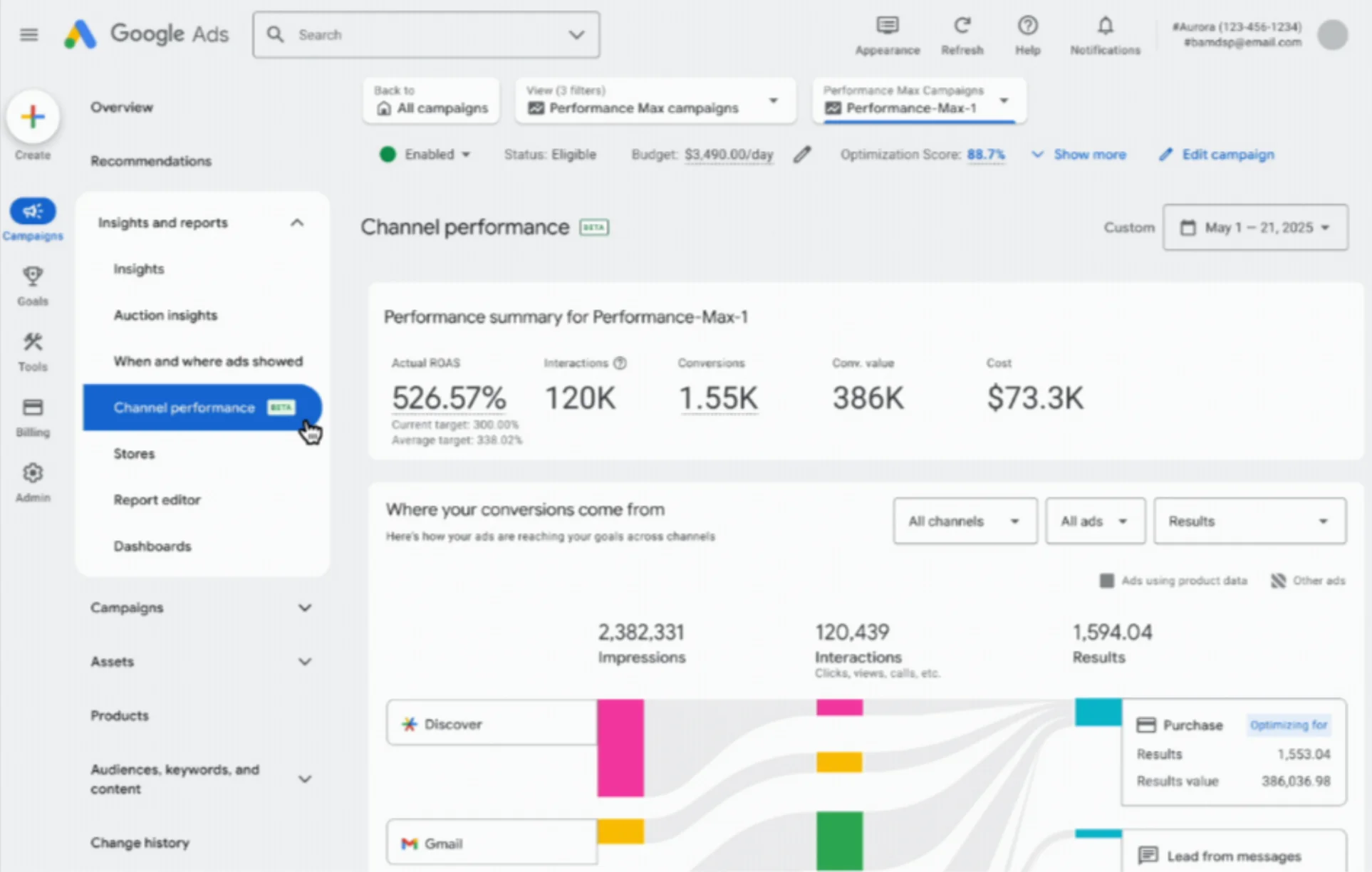
Now you can. For example, if you run an IT services firm, you might discover that YouTube drives 70% of your demo requests at a cost-per-lead 40% lower than the account average, while Display ads are pulling in clicks from people who'll never buy.
That single insight could reshape the entire media strategy: cut what isn't working, double down on what is. This matters more if you manage multiple product lines or serve different customer segments.
The reporting also includes ROI metrics, cost breakdowns, bulk downloads, and segmentation, making it much easier to justify budget decisions to senior leadership or clients.
9. Performance Max can tell what searches are triggering your ads
For years, with Performance Max, you'd set a budget, Google would run your ads, and you couldn't see which searches triggered them. This meant you couldn't tell if your budget was working or being wasted.
Now that’s changed. Google has added search term reporting to Performance Max, so you can see exactly what people searched before your ad appeared.
This visibility often reveals issues advertisers didn’t know existed. For example, a company selling industrial cleaning equipment to warehouse managers might discover its ads are showing for searches like “cheap home cleaning supplies.” That’s consumer traffic with no buying intent. Before this update, that spending was invisible.
Google has also introduced campaign-level negative keywords, allowing you to block up to 10,000 search terms. Once you identify irrelevant searches, you can stop them quickly.
For example, an enterprise HR software company might block “startup” or “free trial” to focus on mid-market and enterprise buyers. You can now see where your budget is going, understand why your ads are showing, and cut off the searches that don’t belong.
How B2B brands can win with the latest Google Ads updates
What worked in paid advertising before may not be working the same way today. Platforms change, buyer behaviour evolves and many B2B teams are left wondering why campaigns are no longer delivering the results they once did.
At KLIQ Interactive, we help B2B organisations across Australia, APAC and Europe review their advertising strategy, understand what the data is telling them, and identify practical ways to improve performance.
Wondering why your B2B paid advertising isn’t generating the leads you expected? Often the issue isn’t the platform but the strategy behind it. Our team at KLIQ is always happy to provide expert advice and share practical insights on what you can improve next. If you would like a second opinion, feel free to get in touch.
FAQs
The most important Google Ads updates for B2B brands include AI-driven bidding, expanded Performance Max capabilities, improved audience signals, and a stronger reliance on first-party data. These changes prioritise intent-based targeting and require a more strategic, data-led approach to campaign management.
B2B brands should focus on intent-based targeting, stronger first-party data, and full-funnel campaign alignment. As automation increases, success depends on guiding Google’s AI with high-quality signals rather than relying on manual optimisation.
Performance Max can deliver strong B2B lead generation results when supported by accurate conversion tracking and audience signals. The most effective campaigns are structured around specific industries, services, or buying stages rather than broad targeting.
AI is now central to Google Ads, influencing bidding, targeting, and creative delivery. For B2B marketers, this means focusing on data quality, clear conversion goals, and defined audience signals to ensure campaigns deliver meaningful business outcomes.
First-party data is critical because it improves targeting accuracy and campaign performance. B2B advertisers should leverage CRM data, customer lists, and website interactions to help Google optimise towards high-value prospects.
Audience signals help guide Google’s AI by indicating who your ideal customers are. B2B marketers should use firmographic data, competitor audiences, and in-market segments to improve targeting precision and campaign efficiency.
Improving lead quality requires aligning campaigns with ideal customer profiles, integrating CRM data into conversion tracking, and using offline conversion imports. This ensures campaigns optimise towards qualified leads rather than low-intent enquiries.
The most important metrics include cost per qualified lead, pipeline contribution, and return on ad spend. These metrics provide a clearer view of business impact compared to clicks or impressions alone.
Google Ads supports account-based marketing (ABM) through audience targeting, customer match, and intent-based signals. This allows B2B marketers to engage high-value accounts with more personalised and relevant messaging.
Common mistakes include relying too heavily on automation without strong inputs, poor conversion tracking, weak audience signals, and lack of alignment with sales data. These issues reduce campaign effectiveness and lead quality.
Yes, Google Ads is highly effective for long B2B sales cycles when combined with remarketing, content strategy, and CRM tracking. It helps capture high-intent demand and supports ongoing engagement across the buying journey.
Many B2B companies partner with agencies like KLIQ to manage the complexity of Google Ads. A specialist agency ensures campaigns are strategically structured, data-driven, and aligned with revenue outcomes.