September 12, 2026
Share:



For years, B2B marketers could measure how Google Search drove traffic to their websites. But when buyers discovered their brand through YouTube, TikTok, Instagram, or X, that data became fragmented.
Social platforms showed views and engagement, but marketers couldn’t easily see whether Google Search was indexing that content and putting it in front of potential buyers. The content could already be generating visibility through Google, but there was no straightforward way to measure that search exposure or understand how it was reaching potential customers.
Google is changing that.
On July 7, 2026, Google announced platform properties, expanding Search Console beyond traditional website reporting. The feature gives businesses and creators a new way to understand how their social and video content is discovered through Google Search.
The bigger story isn't simply that Search Console now supports social platforms. It's that content outside your website can now have a measurable search footprint.
For B2B marketers, that means moving beyond views and likes to ask a more valuable question: Which searches are driving people to our content, and what do they reveal about buyer demand?
This article explains what platform properties measure, how to set them up, their limitations, and how B2B teams can use the data to make smarter content and budget decisions.
Key Takeaways
- Google Search Console now tracks social content. Businesses can see how content from Instagram, TikTok, X, and YouTube performs in Google Search.
- Marketers can see what people are searching for. Search queries, impressions, and clicks show how buyers discover social and video content.
- It does not replace social media analytics. You still need each platform's own data for likes, shares, comments, views, and watch time.
- The data can improve content decisions. Marketers can use search queries to find new topics for blogs, videos, landing pages, and campaigns.
- B2B teams can better connect their channels. Combining search, website, paid, and social data can give businesses a clearer picture of their marketing performance.
What are Google Search Console platform properties?
Platform properties are a new type of Google Search Console property that lets you track how content from your Instagram, TikTok, X, or YouTube account appears and performs in Google Search. Unlike traditional Search Console properties, you don't need to own a website to use them.
In simple terms, Google is giving social and video content its own Search Console reporting. You can see how often your eligible content appears in Google Search, which search queries bring it up, and how many clicks it receives.
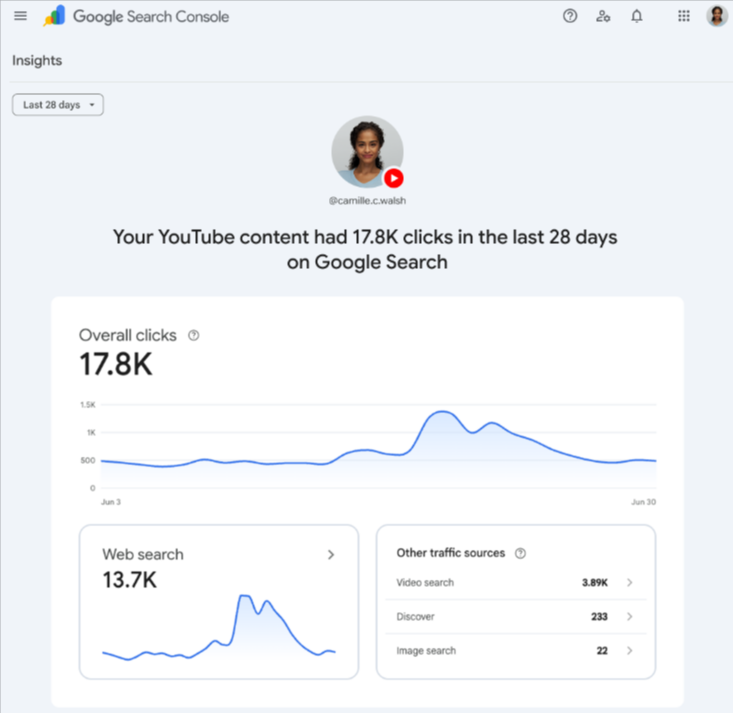
Search Console has traditionally focused on websites, using two main property types: a Domain property, which covers an entire website, and a URL-prefix property, which covers a specific section or URL path. Platform properties add a third option specifically for social and video accounts.
Each platform is set up and reported on separately. There is currently no single dashboard combining all four platforms. If your brand uses YouTube, TikTok, Instagram, and X, you'll need to set up and review each platform property separately.
Before we dive into the details, for those who haven’t yet set up a Platform Property in Google Search Console, here are the steps to get started.
How to set up a platform property in Google Search Console
Setup is straightforward and doesn't require you to edit your website code.
1. Open Search Console and select “Add property.”
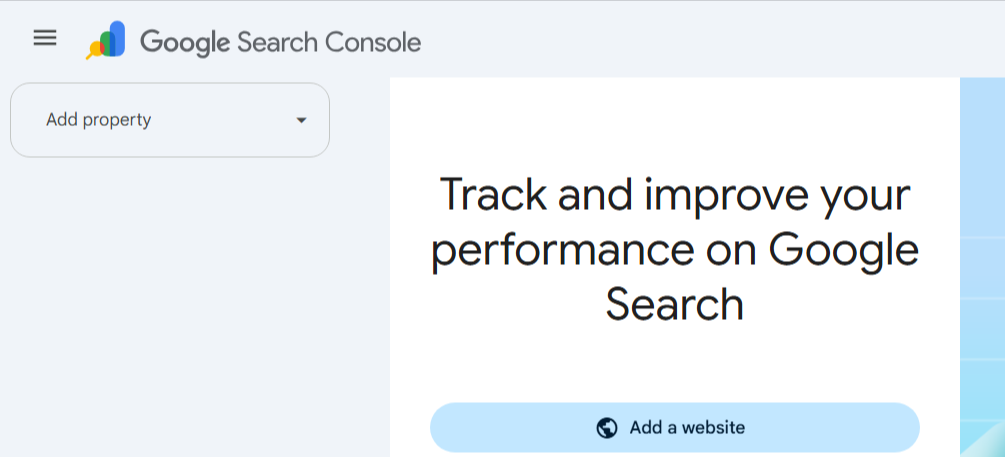
2. Choose your platform: Instagram, TikTok, X, or YouTube.
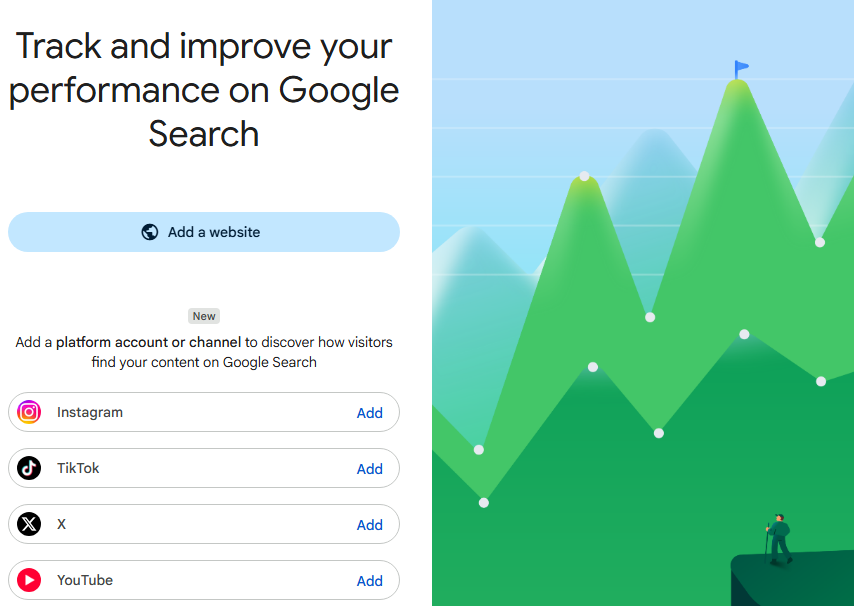
3. Verify that you own or manage the account. You'll authorize the platform connection so Google can associate your content with its Search data.
4. Wait for data to appear. New properties may be empty at first. Check back regularly and give the property enough time to collect meaningful data before making major decisions.
5. Repeat for other platforms. Each platform requires its own property.
6. Compare the data with your website performance. If a topic performs well in Google Search through your YouTube content but isn't covered on your website, it could be a useful content opportunity.
Now that your platform property is set up, it helps to see how it fits alongside the property types you're likely already using in Search Console.
Platform properties vs. domain and url-prefix properties: what's the difference?
- Domain property:
- Covers: Your whole website
- Best for: Teams managing one main site
- URL-prefix property:
- Covers: One section or subdomain of a site
- Best for: Teams that need separate reporting on a part of a site
- Platform property:
- Covers: One social or video account (Instagram, TikTok, X, YouTube)
- Best for: Teams measuring search visibility for content that lives off the website
Performance, insights, and achievements: the 3 reports explained
PERFORMANCE REPORT
- What it shows:
Clicks, impressions, click-through rate, average position, and search queries that led people to your content - Why it matters:
Shows how your content is performing in Google Search and which queries are generating visibility
INSIGHTS REPORT
- What it shows:
Trends over time and your top-performing content in Google Search - Why it matters:
Helps you quickly identify what's working
ACHIEVEMENTS REPORT
- What it shows:
Milestones from your recent performance - Why it matters:
Gives you an early signal of progress and emerging trends
Start with Performance. It's the most useful report for understanding search visibility because it shows which queries are generating impressions and clicks for your social and video content. You can then use those insights to identify topics worth expanding or creating more content around.
What platform properties don't track: important limitations
Before using this data in reports or presenting it to leadership, it's important to understand which platform properties are actually measured and which aren't.
Platform properties report on how eligible social and video content performs across Google Search, Discover, and Google News. They do not replace the analytics provided by Instagram, TikTok, X, or YouTube.
Platform properties don't show:
- In-app engagement: Views, likes, shares, comments, watch time, and other platform-specific metrics.
- Performance inside social platforms: They don't show how your content performs in TikTok's For You feed, Instagram's recommendations, YouTube's feeds, or similar discovery surfaces.
- Ranking or indexing controls: Platform properties are a measurement tool. Verifying an account does not directly improve how its content ranks or gets indexed.
- Historical performance: Data begins when the platform property is verified, so you won't see historical Search Console data for the account.
- A combined cross-platform score: Each platform has its own property and reporting. There isn't a single overall Search Console score that covers Instagram, TikTok, X, and YouTube.
Why platform properties are a bigger deal for b2b marketers
Most B2B brands don't rely on a single channel. They manage a website alongside Instagram, X, YouTube, and, increasingly, TikTok, often with different teams or agencies responsible for each.
Until now, each platform has had its own analytics and KPIs. Marketers could see views, likes, shares, and watch time, but had limited visibility into whether Google Search was helping people discover that content or how much search visibility it was generating.
That's where Platform Properties become valuable, and they add fresh weight to the case that B2B leaders need to own an SEO and discoverability strategy at a leadership level rather than treating it as a purely tactical, channel-by-channel exercise.
That's where Platform Properties become valuable.
Connect search visibility with social content
B2B buyers rarely make decisions after seeing a single piece of content. They research problems, compare solutions, and evaluate vendors across multiple channels before speaking to sales.
A potential customer might discover a company through Google, watch one of its YouTube videos, visit its website, and later engage with its social content.
Platform Properties give marketers more visibility into one important part of that journey: how content published on social and video platforms performs in Google Search.
Find search value beyond the website content
For example, a B2B software company might publish a YouTube video explaining how to solve a specific industry problem. The video may generate moderate views on YouTube, but Search Console could show that it is appearing for relevant, high-intent Google searches.
That gives the marketing team a view of search visibility that traditional YouTube or social metrics don't capture.
It also provides another data point when evaluating content performance and deciding where to invest resources.
Connect organic and paid search insights
Teams can also compare the search queries that generate organic visibility with the keywords they already target in Google Ads.
Organic and paid visibility aren't directly equivalent, but the comparison can help marketers identify where content is earning search exposure and where organic content could complement paid campaigns.
For example, if a YouTube video is gaining visibility for a valuable search term, the team may decide to create supporting website content or evaluate whether that topic deserves additional paid investment.
Turn search data into content ideas
The data can also help shape what the marketing team creates next. If several videos appear for searches around a specific topic, the team could:
- Create an article targeting the same topic.
- Build a landing page around the problem or solution.
- Produce more videos answering related questions.
- Turn high-performing queries into new content ideas.
- Identify paid keywords where organic content is already gaining visibility.
- This gives marketers a way to use search behaviour to inform content decisions across multiple channels.
Identify content gaps
Platform Properties can also reveal content gaps.
If a YouTube video generates Google Search visibility for a topic the company's website doesn't cover, that could signal an opportunity to create a supporting article, case study, or landing page, and feed it directly into your broader content hub strategy.
The result is a more connected content strategy. Instead of treating the website, YouTube, Instagram, TikTok, and X as separate marketing efforts, teams can use search data to understand how content across those channels can support broader discovery.
Move beyond engagement metrics
Instead of asking only:
"How much engagement did this post get?"
B2B teams can also ask:
"Which Google searches are showing this content, and what does that search visibility tell us about our content strategy?"
That's the bigger opportunity.
Platform Properties don't replace social analytics. They add Google Search data to content published beyond a company's website. For B2B marketers, that can mean better visibility into where content is being discovered, stronger content planning, and a clearer understanding of how different channels contribute to organic search visibility.
5 ways B2B marketing teams should use this data
- Step 1: Verify every platform you're active on. Set up the platform properties available in your Search Console account and add others as they roll out.
- Step 2: Give the data time to become useful. Don't make major decisions based on a few days of data. A 28-day view can provide a useful baseline, but you can still monitor early trends before then.
- Step 3: Turn search queries into content ideas. Treat these queries like website keyword data. High impressions with few clicks can reveal opportunities, while queries generating strong clicks can point to topics worth expanding into articles, videos, or landing pages.
- Step 4: Compare organic visibility with paid search. Look for queries where your social or video content appears organically while your team is also spending on ads. This can help identify topics where further content investment may make sense.
- Step 5: Connect insights back to your website. Find topics that are performing well on social and video but are missing from your website. These can become strong candidates for new articles, landing pages, or case studies because you already have evidence of search interest. Tracking these signals alongside your other B2B digital marketing metrics will give you a fuller picture of where to focus next.
Turning search data into an Omnichannel advantage for your B2B marketing strategy
Platform properties give B2B marketers a new way to see how social and video content contribute to Google Search visibility. The opportunity is connecting that data with website, paid search, and social performance to understand how channels work together.
As a B2B digital marketing agency, KLIQ Interactive works with B2B organisations across Australia, APAC, and UK, to connect search, social, and content data, helping businesses improve visibility across Google Search and AI-powered results.
Google's platform properties also enable businesses to turn fragmented channel data into actionable insights. KLIQ can help connect these insights through an omnichannel strategy and reporting through KLIQmetrics, leading to smarter content decisions and measurable marketing results.
Want to turn your search, social, and content data into clearer insights and smarter B2B marketing decisions? Speak to a B2B marketing expert at KLIQ to help you setup, your Google Search Console correctly today.